
Dental implants in India for international patients draw interest for several reasons: cost, access to specialists and coordinated care for people travelling from abroad. They also raise fair questions about quality, safety, travel and what happens if a problem appears after you fly home. This guide covers each of those concerns and gives you checklists.
Whether treatment in India suits you depends on your oral health, bone, medical history and the plan your dentist recommends, so treat this as a way to prepare questions, not a recommendation.
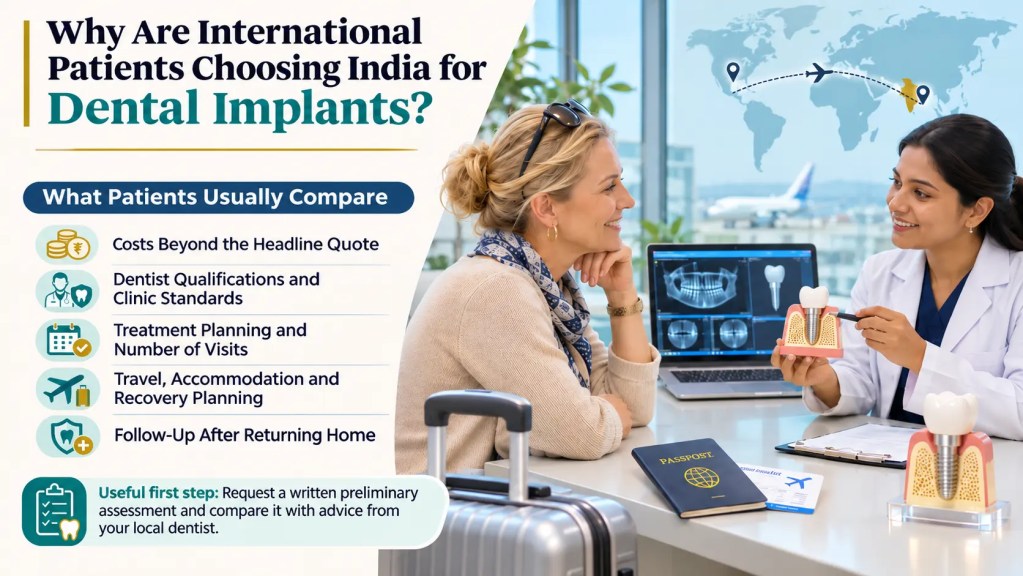
Why Do Patients Consider Dental Implants in India?
Many patients begin with cost, especially when implants are paid for out of pocket at home. Others are drawn by shorter waits for appointments, or by clinics that offer implant placement, bone grafting and prosthetic work in one place. Some clinics in india also run international patient desks that review their scans remotely, prepare quotes and help with hotel bookings, which makes planning from overseas easier. None of this makes India the right choice for everyone. People with complex cases, or those likely to need frequent adjustments, may do better closer to home. A sensible step is to put a written plan from an overseas clinic next to one from your own dentist.
Understanding Costs Beyond the Headline Quote
A low advertised price rarely tells the whole story. Totals change with the implant brand, the number of teeth being replaced, whether bone grafting is needed, and whether the quote covers temporary teeth as well as the final crown or bridge. Imaging and lab work are sometimes billed separately. Then there are flights, hotels and any return visits, which can raise the total considerably. The NHS advises patients to allow for exchange-rate changes and longer stays, and notes that standard travel insurance may not cover planned treatment abroad.
Use this table to compare quotes line by line:
| Item | What to check | Included in the quote? |
| Consultation and imaging | CBCT or X-rays, and who reports them | Yes / No / Unclear |
| Implant fixture | Brand, system | Yes / No / Unclear |
| Abutment and crown | Material and make | Yes / No / Unclear |
| Temporary teeth | Provided during healing? (If advisable) | Yes / No / Unclear |
| Bone graft or sinus lift | Needed in your case? | Yes / No / Unclear |
| Medicines and reviews | Follow-up appointments in India | Yes / No / Unclear |
| Flights, hotel, transport | Your own budget, including a buffer | Not clinic cost |
| Return visits or revisions | Policy if adjustments are needed | Yes / No / Unclear |
Dentist Qualifications, Clinic Standards and Technology
You can check most of this before booking. Ask for the treating dentist’s name, specialist training and registration details, Find out who will actually place the implants and who will make the crown: an implant dentist, an oral and maxillofacial surgeon, a prosthodontist or a team etc. Know whether CBCT imaging is used where your case calls for it, how instruments are sterilised, and whether you will receive a written consent form and complete records. A clinic that answers these plainly is a better sign than one with an impressive equipment list.
Treatment Planning and Number of Visits
Most good plans begin remotely. You send X-rays or scans and photos, and the clinic gives a preliminary opinion. After that comes an in-person examination, often with fresh imaging, before a final plan is confirmed. Treatment then moves through implant placement, a healing period while the implant integrates with the bone, a temporary restoration where suitable, and finally the permanent crown, bridge or denture. Because healing takes time, many patients need more than one trip. Completing everything in a single visit is not appropriate for every patient, and bone quality, grafting and the type of restoration all affect the schedule.
Travel, Accommodation and Recovery Planning
Build slack into your plans. Recovery varies, and swelling or discomfort in the first days can make sightseeing tiring, so avoid packing the itinerary. Choose flights and hotels you can change if your dentist wants an extra review. Ask for clear instructions on medication, soft foods and oral hygiene before you leave the clinic. If your treatment is extensive, travelling with a companion can help with meals, transport and getting around while you recover.
Risks of Dental Treatment Abroad and Follow-Up After Return
Implant treatment carries risks wherever it is done. These include infection, an implant failing to integrate with the bone, delayed healing, and bite or prosthesis problems that only show up once you are chewing normally. Distance adds a further difficulty: a problem that appears weeks later may be hard to resolve if your treating dentist is thousands of miles away. Before you travel, ask for radiographs, implant brand and size, treatment notes, invoices and consent forms to take home. Find out whether a local dentist will review your implants, and ask the Indian clinic what its process is for complications and what happens if you need to return.
Questions to Ask Before Choosing an Overseas Clinic
- Who will place my implants, and what are their qualifications and experience?
- Other foreign clients genuine reviews or experience of clinic treating abroad clients
- What does the written quote include and exclude, in total?
- Which implant system will be used, and will I get the brand and size in writing?
- What is the policy if an implant fails or the restoration needs revising?
- How are instruments sterilised and infection controlled?
- How many visits will I need, and how long between them?
- What records will I receive, and what aftercare plan is in place?
Next Step: Request a Written Preliminary Assessment
If you are considering dental implants in India as an international patient, the most useful first move is a preliminary assessment, not a booking. To prepare one, a clinic usually needs your recent dental X-rays or CBCT scan, clear photos of your teeth and gums, and a short medical and medicines history. Send these through the clinic’s enquiry form and compare the response with your own local dentist’s advice before deciding if you know well. No estimate can guarantee a result or a saving until you have been examined in person.
Frequently Asked Questions
Is it safe to get dental implants in India?
It can be, if you choose a registered, experienced clinician who regularly treats foreign clients, a clinic with clear sterilisation protocols and a written follow-up plan. Safety depends on the clinic and your case.
How much do dental implants in India cost for international patients?
Cost depends on the implant brand, number of teeth, grafting and restoration type. Ask for an itemised written quote and add travel costs.
How many visits are required for dental implants in India?
Often two or more, because healing takes time. Your plan may differ for immediate, grafted or full-arch cases.
Can full-mouth dental implants be completed in one trip?
Sometimes, but not for everyone. Bone, healing and the prosthetic plan decide whether staged visits are safer.
What records should I take home after implant treatment?
Radiographs, implant brand and size, treatment notes, invoices and signed consent forms.
What should I do if I have a problem after returning home?
Contact the treating clinic using the contact you were given, and arrange a local dentist review if symptoms are urgent.