
Why Do Dental Implants Fail? Causes, Warning Signs and Prevention
Dental implants have high long-term survival rates when they are carefully planned and well maintained. But why do dental implants fail in some cases? The claim that most implants fail is a myth, but complications can occur. Failure simply means an implant has lost its stability, the bone supporting it, or its ability to function. This guide explains why that can happen, which signs to watch for and how to lower your risk.
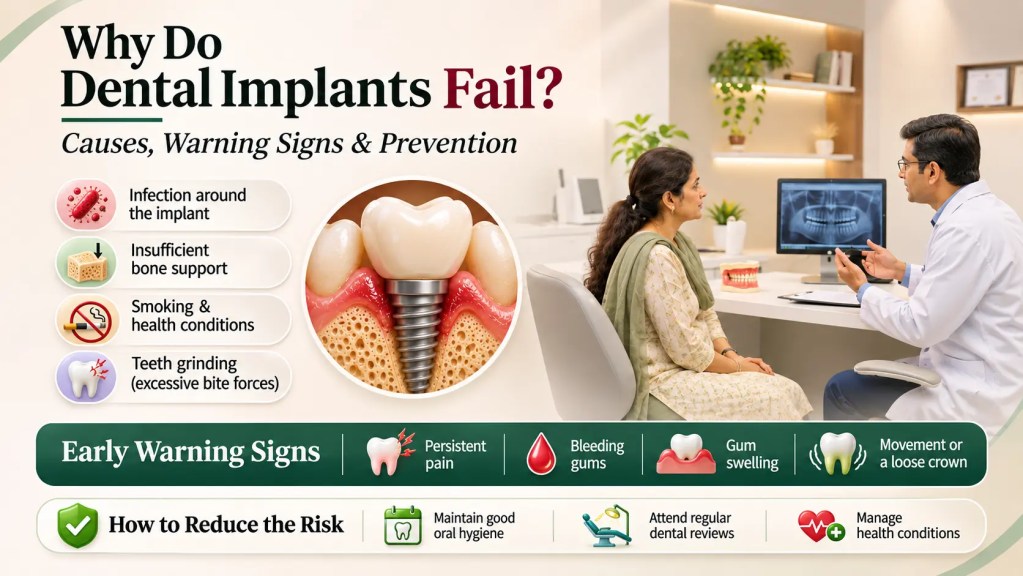
What Is Dental Implant Failure?
An implant has failed when it can no longer be kept stable, comfortable or useful for chewing. Dentists usually describe it by when it happens.
Early Implant Failure
Early failure occurs in the first weeks or months, often because the implant does not bond properly with the jawbone (osseointegration). Healing complications, early movement and infection can all contribute.
Late Implant Failure
Late failure appears after an implant has been working well for some time. It is typically linked to gradual bone loss, peri-implantitis or excessive bite forces.
7 Common Causes of Dental Implant Failure
Peri-implantitis and Implant Infection
Bacterial plaque that builds up around an implant can inflame the gums. If the inflammation is not treated, it may spread to the bone and cause progressive bone loss, which is the leading cause to late failure.
Insufficient Bone Support or Poor Bone Healing
An implant needs enough healthy bone to hold it. Your dentist assesses this with scans before treatment, and Where bone is insufficient, grafting may be recommended.
Smoking, Untreated Gum Disease and Uncontrolled Health Conditions
Smoking can slow healing, and untreated gum disease leaves bacteria close to the implant. Health conditions such as diabetes do not automatically cause failure, but a proper health assessment and good control of the condition matter.
Teeth Grinding and Excessive Bite Forces
Heavy grinding or clenching overloads an implant and can lead to bone loss or to problems with the crown or screw. A night guard may be advised where appropriate.
Planning, Placement or Restoration-Related Issues
The position of the implant, the design of the bite and the follow-up after treatment all influence the result. Problems in any of these can contribute to complications, which is why careful planning and review matter.
Poor oral hygiene
Lack of maintenance visits
Medical conditions affecting bone healing
Early Warning Signs of a Failing Dental Implant
Contact your dentist if you notice any of the following around an implant:
- Pain that persists or gets worse
- Bleeding when you brush or touch the area
- Swelling of the gum
- Discharge or pus
- A bad taste in the mouth
- Gums pulling back from the implant
- Discomfort when chewing
- Visible movement of the implant
- A loose or clicking crown
Not every problem is painful. Bone loss and gum inflammation can develop with very few symptoms, so regular check-ups are important even when everything feels fine.
How to Reduce the Risk of Dental Implant Failure
- Brush and clean around the implant every day, using the aids your dentist recommends
- Attend professional reviews and hygiene visits on schedule
- Ask for support to stop smoking if you smoke
- Get gum disease treated before and after implant treatment
- Manage diabetes with your physician
- Wear a night guard if one has been prescribed
- Follow all post-operative instructions
When Should You Consult a Dentist?
Arrange a prompt review if you notice swelling, pus, bleeding that does not settle, pain that is getting worse, or any movement of the implant or crown. Do not try to treat it yourself, because the right approach depends on the cause. At Dr. Sudhakar Reddy’s Dental Implant Studio, the dentist examines the implant and gums, usually takes imaging to check the bone, and then explains what is happening and what options exist.
Conclusion
Implants are usually successful, but early assessment can help identify complications before they become harder to treat. Book a clinical evaluation if you notice symptoms around an implant.
Frequently Asked Questions
Do 90% of dental implants fail?
No. Dental implants generally have high survival rates. Failure risk varies with oral health, bone support, smoking, medical conditions, bite forces, maintenance and other clinical factors.
What are the first signs of dental implant failure?
Persistent or increasing pain, bleeding, swelling, pus, a bad taste, gum recession, chewing discomfort or implant movement should be assessed by a dentist.
Can a dental implant fail without pain?
Yes. Some bone loss and gum inflammation around implants can develop with few noticeable symptoms, which is why regular reviews are important.
Can a failed dental implant be replaced?
In some cases, yes. The dentist first assesses the cause, bone condition, gum health and healing needs before deciding whether replacement is suitable.
Can smoking increase dental implant failure risk?
Smoking may affect healing and is associated with a greater risk of peri-implant disease. A dentist can give personalised guidance before and after treatment.
Is a loose implant always a failure?
No. A loose crown or screw is different from a loose implant fixture. Both need dental review, but the diagnosis and treatment differ.